
News
All Progressives Congress Fixes Two-Week Deadline for Sale of Presidential, Gov, NASS Forms


The All Progressives Congress has fixed May 16 and May 23, 2026 for the conduct of its presidential and governorship primary elections ahead of the 2027 general elections.
APC National Publicity Secretary, Felix Morka, who made this public on Monday, disclosed that in the ruling party’s timetable signed by the National Organising Secretary, Sulaiman Argungu, presidential aspirants will pay N100 million for expression of interest and nomination forms, governorship aspirants N50 million, Senate aspirants N20 million, and House of Representatives aspirants N10 million.
The Independent National Electoral Commission has fixed the Presidential and National Assembly elections for Saturday, January 16, 2027, while the Governorship and State Houses of Assembly elections are scheduled for Saturday, February 6, 2027.
The Commission also stated that party primaries, including the resolution of disputes arising from them, will take place between April 23, 2026 and May 30, 2026.
According to INEC, campaigns for the Presidential and National Assembly elections will begin on August 19, 2026, while campaigns for the Governorship and State Houses of Assembly elections will commence on September 9, 2026.
As stated in the APC timetable, the sale of forms will run from April 25 to May 2 at the party’s National Headquarters in Wuse II, Abuja, while May 4 is the deadline for the submission of completed forms.
The timetable also shows that screening for presidential aspirants is scheduled for May 9, while other aspirants will be screened between May 6 and May 8, with further screening activities slated for May 12 and May 13.
Primary elections are scheduled for May 18 for the House of Representatives, May 20 for the Senate, and May 21 for State House of Assembly candidates.
It further stated that State House of Assembly aspirants will pay N6 million for both expression of interest and nomination forms.
Female aspirants, youths, and persons with disabilities are required to pay only for the expression of interest form and 50 per cent of the nomination fees for their respective positions.
Morka assured APC members that the ruling party remains committed to conducting credible and transparent primary elections.
The statement read in pary, “The APC reassures members, stakeholders, and Nigerians of its commitment to conducting a credible and transparent primary election that will further strengthen the Party’s internal democracy and consolidate its progressive ideals.”
PDP, ADC
Meanwhile, the National Executive Committee of the Nyesom Wike-backed Peoples Democratic Party, on Monday, adopted a timetable for its 2027 general election activities, setting the stage for nationwide primaries.
The PDP has been engulfed in a prolonged internal crisis marked by factional divisions. One bloc led by Tanimu Turaki is supported by Governors Seyi Makinde of Oyo State and Bala Mohammed of Bauchi State, while the opposing group under Mohammed has the backing of the Minister of the Federal Capital Territory.
Both factions have filed multiple court cases that are still pending as they seek legal resolution over control of the party.
However, the party’s spokesperson, Haruna Mohammed Jungudo, said full details of the timetable would be released by the National Working Committee after concluding administrative processes.
At its 108th NEC meeting held at the party’s National Secretariat in Abuja, the PDP declared that it had emerged from its recent internal crisis, stating that the “era of uncertainty is over.” The party maintained that it remains “strong, united and formidable,” dismissing speculations of internal disarray.
In a communiqué issued at the end of the meeting and signed by Jungudo, the NEC expressed confidence in the newly elected NWC led by National Chairman, Abdulrahman Mohammed.
Reaffirming party cohesion, the committee emphasised the need for reconciliation among aggrieved members and stakeholders, insisting that disputes must be resolved through dialogue and in line with established party structures and democratic principles.
As part of preparations for the 2027 elections, the NEC approved a comprehensive timetable for party primaries, including the sale of Expression of Interest and Nomination Forms. It directed all party organs to strictly adhere to the schedule to ensure a transparent and credible nomination process.
The NEC also stressed full compliance with guidelines issued by the Independent National Electoral Commission, particularly on membership register submissions, conduct of primaries, and dispute resolution.
Party leaders and stakeholders across all levels were urged to begin immediate preparations for state primaries, with an emphasis on strict adherence to statutory provisions and internal regulations to guarantee a smooth and inclusive process.
On internal reforms, the NEC endorsed the ongoing electronic membership registration (e-registration), describing it as a key step toward modernising the party’s database, enhancing transparency, and strengthening grassroots participation.
In his remarks, the Minister of the Federal Capital Territory, Nyesom Wike, reaffirmed his loyalty to the PDP, stating that he has no intention of leaving the party after more than two decades of membership.
He commended the NWC for reclaiming the party’s National Secretariat, describing the move as a demonstration of legitimacy, and urged the leadership to intensify reconciliation efforts by reaching out to members who defected during the crisis.
Wike also called for greater transparency and openness in party affairs, noting that such measures would encourage returning members and rebuild internal confidence.
Also speaking, National Chairman Abdulrahman Mohammed said the PDP had successfully navigated its leadership challenges and is now firmly focused on electoral preparation and strategic consolidation.
Reacting, the Tanimu Turaki-led NWC National Publicity Secretary, Ini Ememobong, in an exclusive interview with The PUNCH, described the meeting as a gathering of APC apologists.
He stated, “The meeting, obviously, people have the right to meet under any guise they choose, but it is clear that if you scan through that gathering, you will see a group of APC apologists masquerading as PDP members. That was a branch of Tinubu supporters within the PDP, and their meeting was simply to consolidate the mandate they claim to support.
“The meeting, discussions, and even information should be disregarded. No Nigerian should take them or anything from them seriously. The PDP is an opposition party and will remain so until it becomes the party in government. There are several matters pending in court, yet these individuals continue to gather and make decisions. These are consequential issues that the court will ultimately address.
“Every member of the PDP who understands that the party is in opposition will not fall prey to such actions. These individuals have openly declared support for the President, and anyone found among them is essentially an APC member operating under the guise of the PDP. Anyone committed to the survival and sustenance of the PDP as an opposition party should not align with such activities.”
Also, the African Democratic Congress has said it is working towards adopting a consensus approach in selecting its presidential candidate for the 2027 general election.
The party’s National Publicity Secretary, Bolaji Abdullahi, disclosed this during an appearance on Arise TV.
According to him, while the party still has provisions for direct primaries, it is prioritising consensus as its preferred option, noting that indirect primaries are no longer considered following amendments to the Electoral Act.
“We are trying as much as possible to adopt the consensus approach because that is the least costly for us. For us, the best case scenario is to be able to engineer consensus and that’s what we are working on,” he said.
“If you take power out of APC, APC is actually nothing. I know the party well,” he said, adding that the party could unravel after Tinubu’s tenure.

Police operatives have arrested a 45-year-old man, identified as Adeniyi Benjamin, for allegedly operating an unlicensed medical facility and administering treatments for about seven years without any medical qualification or licence.
The spokesperson for Oyo Police Command, DSP Ayanlade Olayinka, in a statement on Wednesday said Benjamin was arrested on 2 October 2026 at about 3:00 p.m. by operatives of the Command Monitoring Unit at his clinic, ‘Life Is Good Hospital’ in the Olodo area of Ibadan.
Ayanlade said the arrest followed credible intelligence about his activities at the facility.
“The suspect was found attending to patients and administering treatments, particularly fertility-related treatments, despite not being a certified medical doctor,” the statement said.
The Police spokesperson listed items recovered from the premises of the suspect’s facility to include two weighing scales, four Quantum Magnetic Resonance Body Analysers, one stethoscope, a large carton of assorted medicines, and specimen bottles.
The Oyo police spokesperson added that during preliminary investigation, Benjamin confessed that he had been operating as a quack practitioner for about seven years without any licence to practise medicine.
He further stated that he specialized in fertility-related treatment, which he administered to patients at the facility.
DSP Olayinka said the confession raised concerns about potential risks to members of the public who may unknowingly seek treatment from unqualified persons, especially in sensitive areas such as fertility care.
Investigation is ongoing to establish the full extent of the suspect’s activities and determine whether other persons were connected to the operation of the facility. Appropriate action will be taken in accordance with the law, the police said.
The command advised residents to verify the professional credentials and registration status of anyone offering medical services before entrusting their health or that of their loved ones to them.
Oyo Police Command also appealed to residents to promptly report suspicious medical facilities or persons presenting themselves as medical practitioners without verifiable credentials to the police or relevant regulatory authorities.
The Command also reaffirmed its commitment to protecting lives and property and said it would continue to collaborate with relevant regulatory agencies and members of the public to address activities that endanger residents’ health and safety.
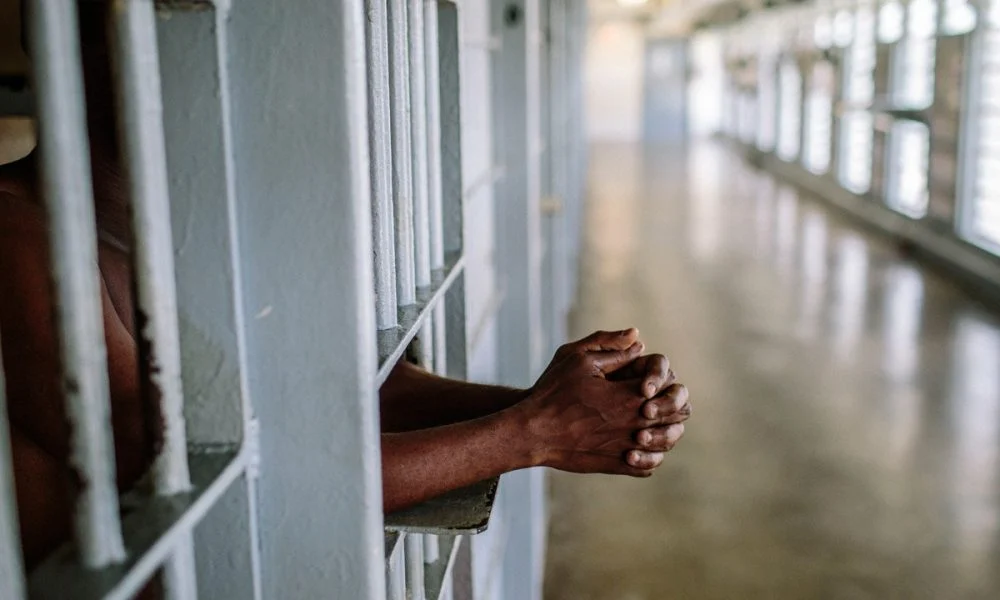
Ogun State Police Command has arraigned five suspects before the Ota Magistrate Court over their alleged involvement in the assault and obstruction of police officers carrying out their lawful duties in Ota.
The suspects were brought before the court following an incident around The Bells area of Iyana-Iyesi, Ota, on October 2, 2026, according to a statement issued on Wednesday by the command’s Police Public Relations Officer, DSP Oluseyi B. Babasiyi.
The police said the incident occurred after a patrol team intercepted and arrested a suspect allegedly found with a large quantity of substances suspected to be Indian hemp.
According to the command, the officers were taking the handcuffed suspect to the station when they were allegedly ambushed by a group of people armed with cutlasses, stones and bottles.
The attack reportedly resulted in injuries to some of the officers, damage to the police operational vehicle and the escape of the suspect in custody.
Following the incident, the command said an intelligence-led operation was launched, leading to the arrest of five suspects identified as Morenikeji Badmus, 36; Adedoja Segun, 40; Jeremiah Odise Ugbede Onride, 49; Mike Stephen, 28; and David Odeh, 32.
The suspects were arraigned on charges bordering on conspiracy, serious assault on police officers, obstruction of lawful duty and conduct likely to cause a breach of the peace.
The police said efforts were still ongoing to arrest other suspects who fled the scene of the incident.
The Commissioner of Police, Ogun State Command, CP Bode Ojajuni, reaffirmed the command’s commitment to protecting police officers carrying out their lawful responsibilities.
“Members of the public are urged to refrain from physical confrontation with law enforcement personnel and channel grievances through established lawful channels,” the statement said.
The command added that “the safety of police officers performing lawful duties remains a priority of the command.”

The Yobe State Police Command has arrested a nine-year-old boy over the alleged killing of four family members in Rugan Badali community, Karasuwa Local Council of the state.
The police said the child allegedly set fire to the family house while his two stepmothers and two younger brothers were asleep, resulting in their deaths.
According to report, the suspect was said to have committed the act after his father flogged him over an allegation that he had stolen a fowl.
Speaking with journalists in Damaturu yesterday, the suspect, whose name was withheld because of his age, allegedly confessed to setting the house ablaze.
He said he bought matches the following day and set fire to the house.
“I carried one of our fowls to sell. People reported me to my father, and I was beaten. The following day, I bought N50 worth of matches in the neighbourhood. While my two stepmothers and two younger brothers were asleep, I set our house on fire as revenge for what my father did to me,” he said.
The boy added: “People came to the rescue. I did not tell them that I was the one who did it until after three days of prayer. I then confessed and was later arrested by policemen and brought here to Damaturu.”
Parading the suspect alongside his father, Abubakar Idi, the police spokesperson, ASP Yusuf Ali, said the boy remained a suspect despite his age.
Ali said the case would be handled in accordance with the law, stressing that the incident underscored the need for greater attention to criminal activities involving children.
He expressed concern over the development, particularly as the state continues to recover from the effects of Boko Haram insurgency and other security challenges.
-
 Health & Wellness1 year ago
President Tinubu Directs Cut in Dialysis Cost from ₦50,000 to ₦12,000
-
News2 years ago
CBN Debunks Fake Circular on New ₦5,000 and ₦10,000 Notes
-
 International News6 months ago
Indian Police Arrest Nigerian Over ₦290m Drug Haul
-

 Business7 months ago
Dangote Refinery Reduces Petrol Gantry Price To ₦1,200 Per Litre
-
 Business7 months ago
After Plea Bargain, Court Discharges Stella Oduah of ₦2.5bn Fraud
-
Business2 years ago
Dangote; We Did Not Fix ₦600/Litre Petrol Price
-
 Trending News1 year ago
NELFUND Disburses ₦86bn To 449,000 Beneficiaries
-
 Opinion2 years ago
Championing the People’s Voice: Obasa’s Dedication to Grassroots Representation By Dave Agboola⁰