
News
More Than 840,000 Foreigners Overstay Visas in Nigeria, Minister Reveals


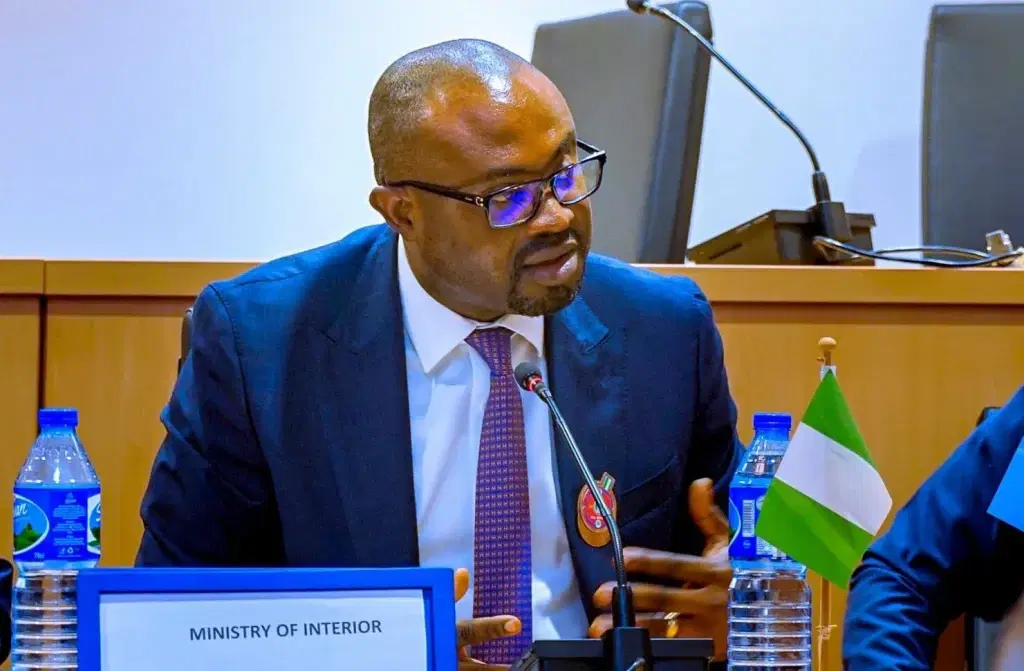
The Minister of Interior, Olubunmi Tunji-Ojo, has disclosed that more than 840,000 foreigners are currently overstaying their visas in Nigeria, describing the situation as a significant migration challenge.
In a guest appearance on Tuesday’s edition of Channels Television’s Politics Today monitored by the column.ng ,he minister said the figure was obtained through the country’s recently upgraded immigration tracking system.
“Just as we have Nigerian overstayers in the UK, Nigeria is also facing the same challenge. As of this morning, through our upgraded system, we have about 848,290 visa overstayers in Nigeria. These are citizens of different countries residing in Nigeria,” he said.
Tunji-Ojo noted that irregular migration remains a global issue requiring international cooperation.
According to him, addressing visa overstays would help curb related crimes such as human trafficking and smuggling.
He stressed the importance of bilateral agreements, particularly in ensuring the “dignified return” of individuals who no longer have the legal right to remain in a country. However, he dismissed concerns that Nigeria could be pressured into accepting foreign prisoners.
“I have seen reports suggesting that prisoners would be brought into Nigeria. This government will not tolerate such. There is no way this administration will sign that kind of agreement,” he stated.
The minister explained that the recently signed Nigeria–UK migration agreement is based on reciprocity and applies strictly to Nigerian nationals.
Tunji-Ojo emphasised that the Federal Government has been transparent about the deal and that it does not include the transfer of foreign inmates.
He further clarified that the agreement differs from the controversial Rwanda asylum plan, noting that it excludes family members and that each case is treated based on specific legal conditions.
He also assured that Nigerians returned under the arrangement “would be treated with dignity” and in line with their fundamental human rights, adding that “no Nigerian stands to lose from the agreement.”
Meanwhile, the minister revealed earlier in March that the Federal Government has strengthened its capacity to track and apprehend visa overstayers.
He said this is being achieved through data collected over the past decade and the operations of the Nigeria Immigration Service’s Integrated Operations Centre and Network Operations Centre.
The development follows a migration pact signed earlier in March between Nigeria and the United Kingdom during President Bola Tinubu’s visit.
The agreement seeks to fast-track the return of Nigerian visa overstayers, failed asylum seekers, and convicted offenders in the UK, while enhancing cooperation on tackling visa fraud, cybercrime, and other transnational offences.


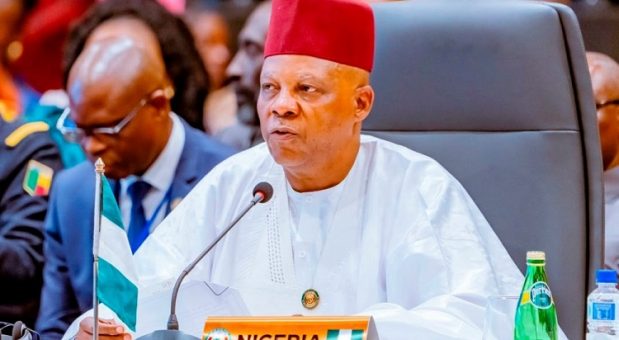
Vice-President Kashim Shettima has urged state governments to stop relying on the Federal Government to resolve their electricity challenges, calling on them to establish functional power markets and attract private investment to improve supply.
Shettima said Nigeria’s ambition to build a competitive industrial economy would remain constrained unless electricity reforms delivered reliable power to businesses, households and public institutions.
He spoke on Wednesday while declaring open the National Stakeholders’ Workshop on the Electricity Act 2023 at the Banquet Hall of the State House, Abuja
Represented by the Deputy Chief of Staff to the President, Senator Ibrahim Hassan Hadejia, the vice-president said the law gave states the opportunity to develop and regulate electricity markets within their jurisdictions, allowing them to design solutions suited to local needs and available resources.
He said, “Electricity supply must become a shared responsibility, pursued with innovation and accountability across the federation. Our States must shed the habit of waiting for Abuja to provide every answer.”
Shettima identified solar energy potential in Sokoto, Borno and Katsina, gas resources in Delta, Rivers and Bayelsa, and hydroelectric opportunities in Niger and Kebbi as resources states could exploit to expand electricity supply.
He urged state governments to turn these advantages into investments that would support agriculture, manufacturing, healthcare and education.
The vice-president warned, however, that passing legislation alone would not improve electricity supply, urging states that had yet to establish regulatory institutions to begin the process without delay.
“Legislation cannot implement itself. States yet to act must begin their legislative and institutional preparations promptly,” he said.
He also proposed a National Electricity Reform Peer Review and Implementation Framework involving the Nigerian Electricity Regulatory Commission (NERC), Federal Ministry of Power, Nigeria Governors’ Forum and state electricity regulators.
According to him, the voluntary framework would enable states to share experiences, strengthen regulatory capacity and assess progress in investment, consumer protection, electricity access and market development.
“No state needs to purchase with failure the knowledge another state has already acquired,” Shettima said.
He stressed that private investment was essential to meeting the country’s electricity infrastructure needs, noting that government funding alone could not finance the required transformation.
“Government cannot finance this transformation from the treasury alone; private capital must arrive with technology and expertise,” he said.
Shettima added that transparent licensing, predictable regulation, commercially viable markets and effective dispute resolution would help build investor confidence.
He also called for stronger consumer protection against arbitrary billing, poor service and unfair commercial practices, insisting that electricity operators must be held accountable for the quality of service they provide.
“The final verdict on this law will be delivered wherever a Nigerian reaches for a switch. Entrepreneurs need dependable power, young Nigerians need employment, and investors need transparent rules under which enterprise can prosper,” he said.
Meanwhile, the Director-General of the Nigeria Governors’ Forum, Dr Abdulateef Shittu, said the forum was working to improve coordination between federal and state institutions in implementing the Electricity Act.
Shittu disclosed that efforts were under way to develop a standard tariff framework for states to protect consumers while supporting investment and commercial sustainability.
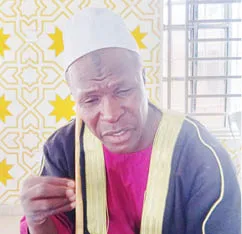
Imam Dahiru Abubakar of a mosque in Madina quarters of Bauchi metropolis has been removed from his position for campaigning for President Bola Ahmed Tinubu’s re-election.
The imam was said to have been subtly campaigning for Tinubu’s reelection during preaching after every obligatory prayer.
He was, however, suspended after he repeated the act following the early morning prayer (Subhi) on Sunday.
“He would tell the congregation after prayer that Tinubu did not cause insecurity and he deserved to be reelected.
A committee was set up after he did the same thing last weekend and he was subsequently removed,” a source said.
Abubakar reportedly said he had been telling the people in his preaching that President Tinubu was not the problem because the hardship and insecurity were caused by “end times phenomenon.”
He said, “I have been preaching to the people to stop castigating President Tinubu for the insecurity and economic challenges. They prepared to vote for him and give him another mandate in 2027 to continue his mandate.
“My preaching centred on telling people to embrace fear of God and stop blaming leaders for the insecurity, particularly President Tinubu, because only God’s intervention can stop the challenges with the power of prayers, and that didn’t go down well with the committee of the mosque.
“My preaching priorities are fear of God and our day-to-day activities. I cited examples of what is happening, especially insecurity in African countries like Sudan, Chad, Mali and others facing crisis. I asked whether President Tinubu was responsible for their insecurity.”
Confirming the incident, chairman of the mosque committee, Imam Abubakar Jibrin, said, “Our major challenge with him was not only his campaign for Tinubu but the way and manner he gathered many people in front of the mosque and sometimes entered the mosque purposely to discuss politics.”
He added, “The mosque committee sat down with him and cautioned him against turning the mosque to a political platform because of the Quranic verse which says the Mosque is solemnly for worship of Allah alone. We vehemently rejected the use of the mosque for political meetings. We have warned him not once or twice but many times, but he didn’t heed our pleas.
“Even though we believe that politics is the process of producing leaders in the country, there are laid down procedures, which are political parties, and the activities should take place in their political party offices and not in the mosque.”
Jibrin also said that, apart from campaigning for the president, he was also insisting on changing the name of the mosque from Abdullahi Bin Zubbair mosque to Masjid Imam Bola Ahmed Tinubu mosque.
“All the committee members said ‘no’ because the mosque belongs to the community. This mosque has a committee of which I am one of the members, and when he insisted, we rejected the idea and resolved that the mosque name would remain Masjid Abdullahi Bin Zubbair.” Jibrin said the committee had removed Abubakar from the position and would not reinstate him.
“He should go and build his personal mosque, or politicians should go buy a mosque for him; that is not our business. Let me clarify that we, members of the committee of the mosque, are not against the candidate of any political party. Our prayer is to Allah to choose the best for the country, be it President Tinubu or any candidate among the presidential candidates that would become a blessing to the country,” Jibrin added.
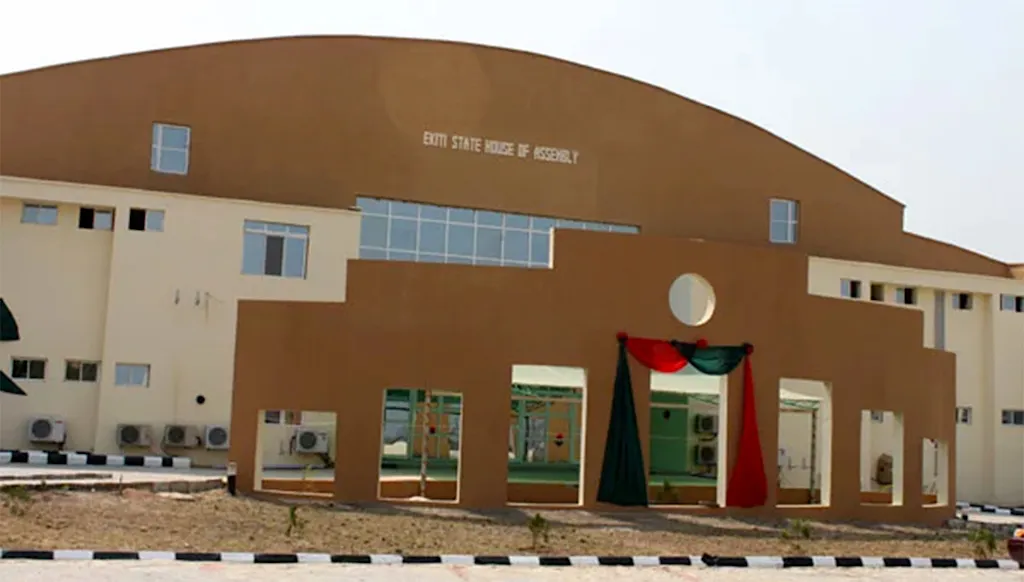
The Ekiti State House of Assembly has passed a bill seeking to amend the 1999 Constitution to provide for the establishment of state police services across the country.
The House disclosed that the bill, known as the Constitution of the Federal Republic of Nigeria, 1999 (Sixth Alteration) Bill, 2026, scaled its second and third readings during plenary.
At the plenary, all 21 lawmakers present supported its passage, signalling the Assembly’s endorsement of the proposed constitutional framework for decentralised policing.
The Speaker, Rt Hon Adeoye Aribasoye, following the passage, directed the Clerk of the House to transmit the bill to the National Assembly alongside the observations made by the state legislature.
Aribasoye described the proposed establishment of state police as an issue that had dominated national discourse for more than two decades.
He said the country needed an effective and responsive policing system capable of addressing the security challenges confronting communities.
Aribasoye noted that Nigerians had repeatedly expressed concerns over delayed responses to distress calls, operational limitations and the distance between security agencies and the communities they were expected to protect.
According to him, inadequate and poorly coordinated local policing in some areas had contributed to insecurity, threatening livelihoods, disrupting education, undermining business confidence and weakening public trust.
He said a properly structured state police system could improve accountability by bringing policing leadership and oversight closer to the people and their elected representatives, subject to appropriate constitutional safeguards.
Aribasoye added that Nigeria could not afford unnecessary delays in tackling insecurity, describing state police as a practical necessity rather than a theoretical option.
In its report, the Committee of the House recommended that the Assembly concur with the proposed constitutional alteration, subject to an amendment to Section 317A(5).
The committee said it considered the bill clause by clause before recommending its passage, with a specific proposal to insert the words, “an Act of the National Assembly or a Law of the State House of Assembly, as applicable,” after the words “this Constitution” in the newly proposed Section 317A(5).
It said the amendment was intended to recognise the legislative authority of the National Assembly and state Houses of Assembly, within their respective constitutional jurisdictions, in authorising relevant security arrangements.
The committee recommended that the House approve the bill subject to the proposed amendment, which forms part of the observations to be forwarded to the National Assembly for consideration.
-
 Health & Wellness1 year ago
President Tinubu Directs Cut in Dialysis Cost from ₦50,000 to ₦12,000
-
News2 years ago
CBN Debunks Fake Circular on New ₦5,000 and ₦10,000 Notes
-

 Business7 months ago
Dangote Refinery Reduces Petrol Gantry Price To ₦1,200 Per Litre
-

 International News7 months ago
Indian Police Arrest Nigerian Over ₦290m Drug Haul
-
 Business7 months ago
After Plea Bargain, Court Discharges Stella Oduah of ₦2.5bn Fraud
-
Business2 years ago
Dangote; We Did Not Fix ₦600/Litre Petrol Price
-
 Trending News1 year ago
NELFUND Disburses ₦86bn To 449,000 Beneficiaries
-
 Opinion2 years ago
Championing the People’s Voice: Obasa’s Dedication to Grassroots Representation By Dave Agboola⁰